
Ultimate Winter HVAC Guide for Pennsylvania Homeowners
Winter in Pennsylvania brings freezing temperatures, rising heating costs, dry indoor air, and increased strain on HVAC systems. Homeowners in Ardmore, Bryn Mawr, Havertown, Bala Cynwyd, Conshohocken, and other Main Line suburbs experience some of the most common cold-season problems: uneven heat, short cycling furnaces, boiler failures, heat pump concerns, and even a complete loss of heat during snowstorms. This comprehensive guide brings together Green Air Concepts’ seven most requested seasonal topics, offering practical steps and professional solutions to keep your home safe and warm all winter.
If you are searching for trusted support from heating and air conditioning contractors in the Ardmore area, Green Air Concepts provides reliable service, expert diagnostics, and long-term comfort solutions for homes throughout the Main Line.
Heat Pump Performance Challenges in Pennsylvania Winters
Heat pumps have become a popular high-efficiency heating solution, but homeowners often wonder if they provide enough warmth during Pennsylvania’s coldest months. Modern cold-climate heat pumps can perform very well even in below-freezing temperatures, but sizing, installation quality, and home insulation all affect their outcome. When temperatures fall below certain thresholds, systems may rely on auxiliary heat, which can increase energy use if not properly maintained.
Common signs a heat pump needs attention include ice buildup, weak airflow, unusually long heating cycles, and rooms that never reach the thermostat setting.
For homeowners considering a replacement system, Green Air Concepts offers professional HVAC installation and guidance on heat pumps, dual fuel systems, and efficient winter-ready configurations designed for Pennsylvania homes.
Cold snaps expose every weakness in a heat pump. Here is a closer look at how heat pumps handle Pennsylvania winters.
Common Winter Habits That Cause Heating Bills to Rise
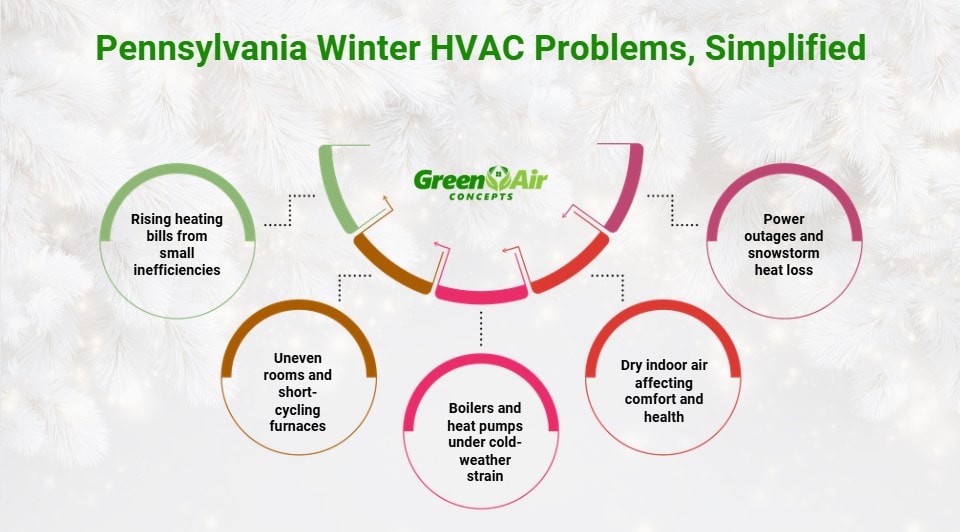
Energy use increases naturally during colder months, but sudden or dramatic bill spikes are often preventable. Common causes include thermostat overuse, air leaks around windows and doors, clogged filters, poor insulation, and aging or neglected heating equipment. When a furnace or heat pump must work harder to compensate, energy consumption rises.
A seasonal energy strategy can help reduce costs, including balanced thermostat settings, weatherstripping, filter replacement every 30 to 60 days, and HVAC maintenance before peak heating demand begins.
Winter bills jump fastest when small inefficiencies pile up. Here is a breakdown of the most common causes behind December heating bill spikes.
Signs a Boiler May Struggle Through Winter
Boilers are highly respected for producing steady, comfortable heat. However, Pennsylvania winters place heavy demands on older hydronic systems, and issues can develop gradually. Warning signs include delayed heating response, unusual kettling noises, higher fuel consumption, water around the unit, or radiators that no longer heat consistently. Corrosion, scale buildup inside heat exchangers, and failing pumps can also reduce performance and reliability.
A qualified heating contractor can inspect circulation components, safety controls, and efficiency measurements to help you decide if repairs, system flushing, or boiler replacement is the best long-term option.
Boiler failures rarely start with loud warnings, they start quietly. Know what aging boilers typically reveal before cold weather sets in.
Indoor Air Quality Drops in Many Pennsylvania Homes Each Winter
Indoor air quality declines in winter because heated air carries less moisture. Humidity levels can drop below 30 percent, creating dry skin, irritated sinuses, static shocks, increased dust, and a greater spread of airborne allergens. Pennsylvania homes are sealed tightly to preserve warmth, which traps stale air and amplifies dryness.
Whole-home humidifiers, air purification, upgraded filters, and scheduled system cleaning all support better winter comfort. Seasonal heating use makes filtration more important, and homeowners should replace filters every 30 to 60 days.
Dry air disrupts comfort long before most homeowners notice it. Learn why winter IAQ drops so sharply inside Pennsylvania homes.
How to Protect Your Home During a Winter Heating Outage
A heat outage during a winter storm can quickly become a safety concern. Homeowners should know how to take immediate protective steps, including closing off unused rooms, layering warm clothing, and preventing frozen pipes. If it is safe, check the thermostat, power supply, fuel source if applicable, and reset procedures for the unit.
Green Air Concepts provides HVAC emergency repair during harsh weather conditions when heat loss threatens home safety. For a detailed safety checklist to use before or during a service call, read What to Do If Your Heat Goes Out During a Snowstorm.
Uneven Heating? See What Might be Causing this in YourTwo-Story Pennsylvania Home
Two-story Pennsylvania homes frequently experience temperature imbalance, where upper floors remain cold despite long heating cycles. Causes include duct leakage, inadequate airflow, blocked returns, improper zoning, insufficient insulation, and equipment that is not sized properly for the home. Simple adjustments such as opening all supply vents, leaving interior doors open for better circulation, and verifying filter cleanliness can help. However, persistent uneven heat often requires duct balancing, booster fans, zoning solutions, or insulation upgrades. A professional evaluation can determine the source of the temperature difference.
Uneven heat is almost always a symptom, not the real problem. Here is what typically causes upstairs temperatures to fall behind.
The Real Reasons Furnaces Short-Cycle in Winter
Short cycling, when a furnace turns on and off frequently, is one of the most common winter HVAC complaints. It can be caused by restricted airflow, dirty filters, flame sensor issues, thermostat placement or malfunction, or overheating within the unit. Short cycling wastes energy, wears down components more rapidly, and reduces overall comfort.
Furnace short cycling can also indicate a more serious concern, such as heat exchanger damage or exhaust blockage. These problems must be addressed promptly through professional furnace repair to prevent safety risks.
Frequent furnace cycling signals a hidden issue demanding attention. Here is why furnace short cycling appears during winter.
When to Call a Professional Heating Contractor
While simple troubleshooting can solve minor comfort issues, certain warning signs indicate that professional diagnostics are necessary to protect both your safety and your heating equipment. Homeowners should schedule service if the heating system begins producing unusual sounds, including banging, rattling, or high-pitched squealing, since these noises may signal failing blower motors, loose burners, ignition problems, or cracks in internal components.
A sudden increase in fuel or energy consumption without a change in thermostat settings often points to airflow restrictions, duct leaks, or an overworked furnace or boiler struggling to maintain temperature. Any burning smell, soot accumulation, or discoloration near the unit requires immediate attention, as these conditions may involve overheating components, exhaust drafting issues, or potentially dangerous carbon monoxide concerns.
Uneven temperatures that do not improve with filter changes or thermostat adjustments can be connected to failing zone controls, unresolved airflow imbalances, or malfunctioning heat distribution components. If your breaker trips repeatedly when the system runs, electrical faults could be placing stress on motors and control boards, increasing the risk of complete system failure. Visible rust, corrosion, or water around heating equipment should never be ignored, since these issues may damage heat exchangers or compromise venting and combustion safety. When any of these conditions appear, prompt professional assessment helps prevent emergency breakdowns and protects the long-term value of your heating system.
Green Air Concepts provides heater repair services throughout Ardmore, Bryn Mawr, Bala Cynwyd, Havertown, and the entire Main Line region, delivering reliable diagnostics and long-term solutions that restore comfort, efficiency, and peace of mind.
Key Winter Maintenance Steps for Reliable Home Heating
Every Pennsylvania homeowner should complete or schedule key winter HVAC maintenance to ensure reliable, efficient heating throughout the coldest months of the year. The foundation of winter readiness begins with replacing HVAC filters every 30 to 60 days, because restricted airflow forces furnaces and heat pumps to work harder, increasing fuel or electricity consumption while circulating more dust and allergens through the home. Thermostat calibration is equally important; if your thermostat is even a few degrees off, your system may run longer than necessary, driving up heating bills without improving comfort.
Homeowners with uneven temperatures between floors benefit from duct leak inspections and airflow balancing, since leaking or poorly designed ductwork is one of the most common reasons heat fails to reach bedrooms and second floors in Main Line homes. Maintaining proper humidity through seasonal humidifier adjustments prevents static shock, dry skin, sinus irritation, and wood damage, especially when indoor air drops below 35 percent humidity. Safety checks for gas and electric systems are critical as well, particularly for older furnaces or boilers, since cracks in heat exchangers, damaged burners, and electrical faults can elevate carbon monoxide risk or trigger unexpected shutdowns.
The most important step is an annual heater tune-up performed before peak winter demand; a trained technician can test ignition systems, inspect heat exchangers, lubricate motors, verify venting, and ensure the entire system operates at the highest possible efficiency. Professional seasonal maintenance supports lower energy bills, stronger indoor comfort, fewer emergency repair calls during snowstorms, and a longer service life for your heating equipment, helping homeowners avoid the cost and disruption of early system replacement.
Key Takeaways
- Modern cold-climate heat pumps can perform well in Pennsylvania winters, but require proper sizing, installation, and home insulation.
- Heating bills often rise due to preventable habits like thermostat overuse, air leaks, and clogged filters.
- Replace HVAC filters every 30 to 60 days to prevent restricted airflow, which forces heating systems to work harder.
- Warning signs for a struggling boiler include kettling noises, delayed heating, high fuel consumption, and water around the unit.
- Indoor air quality declines in winter due to low humidity, leading to dry skin, static shocks, and increased dust. Whole-home humidifiers can help.
- During a winter heat outage, immediately close off unused rooms, layer warm clothing, and take steps to prevent frozen pipes.
- Uneven heating, especially in two-story homes, is often caused by duct leakage, poor airflow, or improper zoning and may require professional balancing.
- Furnace short cycling is a common issue that wastes energy, wears down components, and can signal serious safety concerns like heat exchanger damage.
- Schedule professional service immediately if you notice unusual banging or rattling sounds, a burning smell, soot accumulation, or a sudden, unexplained spike in energy consumption.
- The most important step for winter readiness is an annual heater tune-up to ensure your system operates safely and efficiently before peak demand.
Schedule Winter HVAC Service with Green Air Concepts
Pennsylvania winters demand reliable, efficient heating. If you want a trusted partner instead of searching for HVAC contractors or AC company listings every season, Green Air Concepts is here to support your comfort. We provide heater tune-up services, system diagnostics, emergency response, and long-term solutions for all makes and models of heating equipment.
Protect your comfort, efficiency, and peace of mind this winter. Contact Green Air Concepts today to schedule professional heating and air repair and ensure your home stays warm all season.
Need HVAC Service?
Contact the experts at Green Air Concepts.
Call us at 484.222.1233