
Top 9 Mistakes That Shorten Your Furnace’s Lifespan
Top mistakes that shorten your furnace’s lifespan often happen quietly, long before a system fails outright. Homeowners in Ardmore and the Main Line suburbs rely heavily on their furnaces during Pennsylvania winters, and small oversights can add years of wear to a system in just one season. Many furnace failures are not caused by age alone but by preventable habits that strain components, reduce efficiency, and increase the risk of breakdowns when heat is needed most.
A furnace is a long-term investment, and most systems are designed to last 15 to 20 years with proper care. When maintenance is skipped or warning signs are ignored, that lifespan can be cut short by several years. Understanding the most common mistakes allows homeowners to make smarter decisions, reduce repair costs, and keep their homes comfortable through every cold snap.
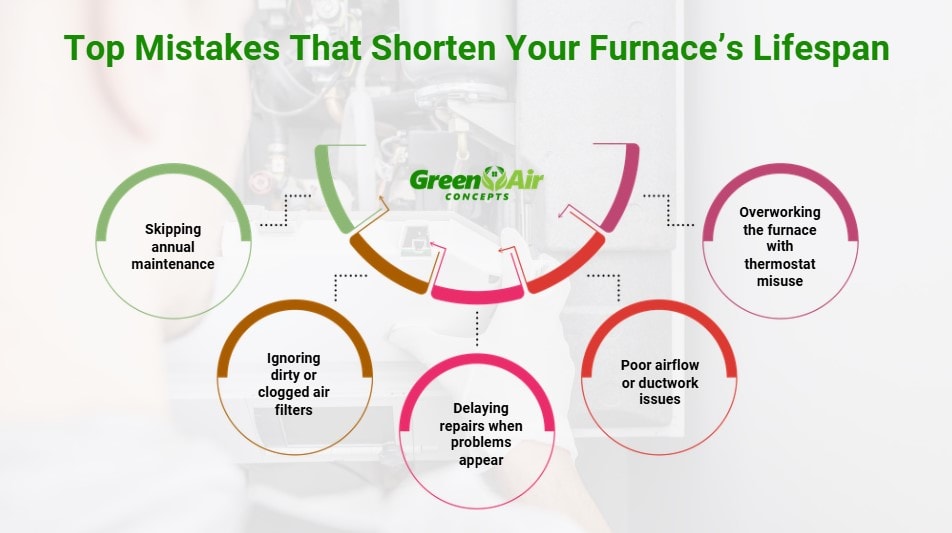
1. Skipping Annual Furnace Maintenance
One of the most common and damaging mistakes is skipping routine furnace maintenance. Many homeowners wait until something goes wrong before calling a heating contractor, but furnaces rarely fail without warning. Small issues like dirty burners, loose electrical connections, or airflow restrictions develop slowly and worsen with each heating cycle.
Without annual service, dust buildup reduces efficiency and causes the furnace to work harder to produce the same level of heat. Components overheat, safety sensors trip more often, and internal parts wear out prematurely. Over time, this strain shortens the overall lifespan of the system.
Scheduling regular HVAC maintenance ensures that filters are replaced, components are cleaned, airflow is balanced, and safety controls are tested before winter demand peaks. A professional tune-up helps catch minor issues early and protects your furnace from unnecessary stress.
2. Ignoring Dirty or Clogged Air Filters
Dirty air filters are one of the fastest ways to shorten a furnace’s life. When filters become clogged, airflow is restricted, forcing the system to push air through narrow pathways. This increases energy use and causes overheating, which puts extra strain on the blower motor and heat exchanger.
In homes throughout Bryn Mawr, Bala Cynwyd, and Havertown, winter heating systems often run for long hours. A dirty filter during this time accelerates wear and can even cause the furnace to shut down for safety reasons. Reduced airflow also leads to uneven heating, making some rooms feel cold while others overheat.
Filters should be checked every 30 to 60 days during the heating season. Replacing air filters regularly improves efficiency, supports better indoor air quality, and reduces strain on critical furnace components.
3. Delaying Repairs When Problems Appear
Another major mistake is delaying repairs after noticing unusual furnace behavior. Strange noises, frequent cycling, inconsistent heat, or rising energy bills are early warning signs that something is wrong. Many homeowners ignore these symptoms until the furnace stops working altogether.
Delaying service allows minor issues to grow into major repairs. A loose belt or failing sensor can lead to overheating, cracked components, or complete system failure. In some cases, continued operation with unresolved issues can cause irreversible damage to the heat exchanger, which often means full furnace replacement.
Prompt furnace repair protects both performance and longevity. Addressing problems early reduces repair costs and helps your system continue operating safely and efficiently throughout the winter.
4. Overworking the Furnace With Poor Thermostat Habits
Thermostat misuse is another common factor that shortens furnace lifespan. Frequently adjusting the temperature throughout the day causes the furnace to cycle on and off more often than necessary. Each cycle adds wear to ignition components, motors, and electrical connections.
Many homeowners also set the thermostat higher than needed, believing it will heat the home faster. This does not speed up heating but forces the furnace to run longer, increasing fuel consumption and system strain.
Maintaining a steady temperature between 68 and 70 degrees when home, with slight setbacks overnight or when away, reduces unnecessary cycles. Upgrading to a programmable or smart thermostat allows for consistent comfort while minimizing wear on the system.
5. Neglecting Ductwork and Airflow Issues
Furnace performance depends heavily on proper airflow. Leaky, blocked, or poorly designed ductwork forces the furnace to work harder to distribute heat. When warm air escapes into attics, basements, or crawl spaces, the system compensates by running longer and hotter.
Many older homes in the Main Line suburbs have aging duct systems that were never sealed or balanced properly. Over time, this leads to pressure imbalances that strain the furnace and shorten its operational life.
A professional duct inspection can identify leaks, blockages, or airflow issues that reduce efficiency. Improving duct performance not only extends furnace life but also delivers more consistent comfort throughout the home.
6. Failing to Address Indoor Air Quality Problems
Poor indoor air quality contributes more to furnace wear than many homeowners realize. Excess dust, pet dander, and debris circulate through the system and settle on internal components. Over time, this buildup reduces efficiency and interferes with proper combustion and airflow.
Dry winter air can also cause problems. Low humidity increases static electricity and dries out internal furnace components, contributing to faster wear. Homes without proper humidity control often experience more frequent maintenance issues.
Seasonal maintenance combined with air quality solutions such as humidifiers and high-quality filtration helps protect furnace components while improving comfort and health inside the home.
7. Relying on an Aging Furnace Without Evaluation
Many homeowners continue relying on furnaces that are well past their prime without regular evaluation. While age alone does not mean immediate replacement is necessary, older systems require closer monitoring. Worn parts, outdated technology, and declining efficiency all increase the risk of sudden failure.
Furnaces over 15 years old benefit from annual professional inspections to assess performance and safety. In some cases, upgrading to a newer system with modern efficiency standards may be more cost-effective than ongoing repairs.
A trusted heating contractor can help determine whether continued maintenance or heating installation is the best option based on system condition and household needs.
8. Skipping Safety Checks on Gas and Electrical Components
Safety-related neglect is another mistake that shortens furnace lifespan and creates serious risks. Gas furnaces rely on clean combustion, proper venting, and functioning safety sensors. Electrical furnaces depend on secure wiring and reliable control boards.
Without routine safety checks, small issues like loose connections or dirty burners can lead to overheating, system shutdowns, or hazardous conditions. Safety-related shutdowns often occur during extreme cold, when furnaces are under the greatest strain.
Professional service includes testing safety controls, inspecting heat exchangers, and ensuring proper operation. These checks protect both your home and your furnace investment.
9. Choosing the Wrong Contractor or Skipping Professional Help
Attempting DIY furnace repairs or relying on inexperienced service providers often leads to improper fixes that cause long-term damage. Furnaces are complex systems that require specialized training and tools. Incorrect adjustments can reduce efficiency, void warranties, or create unsafe conditions.
Working with experienced heating and air conditioning contractors ensures repairs and maintenance are performed correctly. Qualified technicians follow manufacturer guidelines, use proper diagnostics, and address root causes rather than temporary symptoms.
Professional service supports system longevity and gives homeowners confidence that their furnace is prepared for Pennsylvania winters.
How to Protect Your Furnace for the Long Term
Avoiding these common mistakes significantly extends furnace lifespan and improves winter comfort. Simple steps like replacing filters, scheduling annual maintenance, addressing repairs promptly, and managing thermostat settings make a measurable difference over time.
Homeowners who take a proactive approach experience fewer breakdowns, lower heating bills, and more reliable performance year after year. Preventive care also reduces the likelihood of emergency hvac service calls during severe winter weather.
Key Takeaways
- Skipping maintenance and filter changes accelerates furnace wear
- Ignoring early warning signs leads to costly repairs and system failure
- Poor airflow and duct issues strain furnace components
- Proper thermostat use reduces unnecessary heating cycles
- Professional service protects efficiency, safety, and system lifespan
If you want to avoid the mistakes that shorten your furnace’s lifespan, Green Air Concepts is here to help. Our team provides professional furnace service for homeowners throughout Ardmore, Merion, Newtown Square, Conshohocken, and the surrounding Main Line suburbs. From seasonal tune-ups to expert repairs, we help protect your heating system and keep your home comfortable all winter long.
Contact Green Air today to schedule furnace service and ensure your system is built to last.
Need HVAC Service?
Contact the experts at Green Air Concepts.
Call us at 484.222.1233