
How to Tell If Your Boiler Can Handle Another Winter
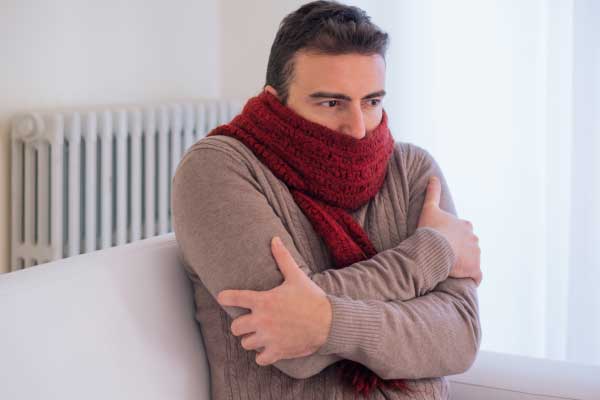
When temperatures drop across Bala Cynwyd and other Main Line suburbs, your boiler becomes one of the most important systems in your home. It provides the steady warmth and hot water that keep winter comfortable. Yet as boilers age, many homeowners ask the same question: Can my boiler handle another winter?
A reliable boiler should last between 15 and 20 years, but its condition depends on maintenance, water quality, and usage. Recognizing early warning signs of trouble can help you avoid mid-season breakdowns, high heating repair costs, and unsafe operation.
Here is how to assess your boiler’s readiness before another Pennsylvania winter begins.
1. Check the Age and Service History
The first factor to consider is your boiler’s age. Most systems start to lose efficiency after 12 to 15 years, especially if annual maintenance has been inconsistent.
Older boilers use outdated technology that consumes more fuel and produces less heat per unit of energy. Even if the system still runs, it may already be costing you extra money every month.
What to do:
- Review your service records. If the boiler has needed frequent repairs in recent years, reliability will likely continue to decline.
- Schedule professional HVAC maintenance to evaluate combustion efficiency and safety controls.
- Ask whether upgrading to a newer, high-efficiency boiler would reduce your long-term energy costs.
2. Listen for Unusual Noises
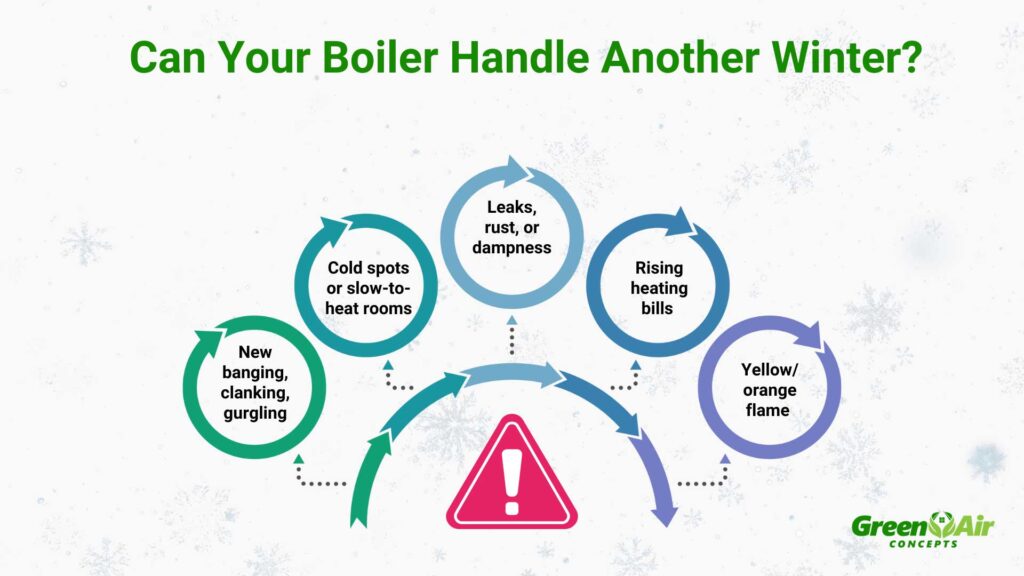
Boilers are generally quiet systems, so new or loud noises almost always signal a problem. Banging, clanking, or gurgling sounds may indicate trapped air, limescale buildup, or uneven water flow.
In hydronic systems, “kettling” occurs when mineral deposits restrict water movement, causing boiling and vibration inside the heat exchanger. If left unaddressed, this can damage internal components and shorten your boiler’s lifespan.
What to do:
- Bleed radiators to remove trapped air.
- Have a technician flush the system if you suspect mineral buildup.
- During your heater tune-up, request a noise inspection to identify internal pressure or circulation issues.
3. Watch for Inconsistent Heating or Cold Spots
When a boiler can no longer distribute heat evenly, it often signals internal inefficiency or failing components. Uneven temperatures between rooms, radiators that stay cold, or water that takes too long to heat are common red flags.
What to do:
- Check thermostat settings and ensure radiators are fully open.
- Inspect pressure levels; low pressure may cause heat loss.
- If problems persist, contact heating and air conditioning contractors near you to test pumps, valves, and heat exchangers.
4. Monitor for Leaks or Corrosion
Moisture around your boiler base or visible rust is a serious warning sign. Even small leaks reduce pressure and efficiency, while corrosion can lead to component failure.
Common causes include aging seals, deteriorated pipes, and internal tank corrosion from untreated water. Leaks also pose a safety risk if water contacts electrical components.
What to do:
- Check for dampness around joints, valves, or fittings.
- If you smell metallic or musty odors, have your boiler inspected immediately.
- Contact a qualified heating contractor before operating the system again if leaks or rust appear.
Addressing these issues early can prevent major water damage and expensive replacements later.
5. Pay Attention to Energy Bills
A steady rise in heating costs, even when usage stays the same, often indicates a drop in efficiency. Older boilers lose heat through flue gases and worn heat exchangers, forcing the system to burn more fuel for the same result.
What to do:
- Compare current utility bills with those from previous winters.
- Schedule an HVAC tune-up to test combustion efficiency.
- Ask your technician if your boiler meets modern AFUE (Annual Fuel Utilization Efficiency) standards.
If efficiency ratings fall below 80 percent, upgrading to a high-efficiency condensing boiler could save up to 30 percent on annual heating costs.
6. Check the Pilot Light or Ignition System
A healthy boiler flame should burn bright blue. Yellow or orange flames indicate incomplete combustion, which can release harmful carbon monoxide. Intermittent ignition, flickering flames, or frequent resets are other signs of trouble.
What to do:
- Never ignore discolored flames. Shut the system off and contact HVAC repair near you immediately.
- Install carbon monoxide detectors near the boiler and sleeping areas.
- Have your burner assembly and ignition system tested annually for safe operation.
Carbon monoxide leaks are rare but potentially dangerous. Annual inspection is essential for both safety and peace of mind.
7. Evaluate Overall System Efficiency and Comfort
Beyond mechanical wear, aging boilers simply cannot match the efficiency and comfort of modern systems. Today’s high-efficiency models feature modulating burners, smart controls, and sealed combustion chambers that adapt to heating demand automatically.
Upgrading before a failure offers key benefits:
- Lower fuel consumption and bills
- Improved heat distribution throughout the home
- Reduced emissions for a cleaner environment
- Quieter operation and improved comfort
If your boiler is more than 15 years old or requires frequent service, replacement before winter is often the smarter investment.
Key Takeaways
- Boilers over 15 years old may struggle to keep up with Pennsylvania’s cold winters.
- Unusual noises, cold spots, or rising bills signal efficiency loss.
- Regular HVAC maintenance can extend the lifespan and catch issues early.
- Upgrading to a new boiler improves comfort, safety, and long-term savings.
Stay Warm and Worry-Free with Green Air Concepts
Before winter sets in, schedule a professional boiler inspection with Green Air Concepts. Our experienced team provides thorough assessments, furnace repair and installation services, and honest recommendations to help you stay warm without unnecessary repairs.
Whether you need a quick tune-up, a system upgrade, or emergency heating service, we proudly serve homeowners throughout Ardmore and the Main Line with reliable, local expertise.
Contact Green Air Concepts today to ensure your boiler is ready for another Pennsylvania winter, and every one after that.