
Upgrading Parts vs. Replacing the Whole System
Upgrading parts vs. replacing the whole system is a decision many homeowners in Ardmore and the Main Line suburbs face as their HVAC equipment ages. When your heating or cooling system starts acting up, it is tempting to fix only what is broken and move on. In some situations, targeted upgrades are the right choice. In others, replacing the entire system delivers better comfort, efficiency, and long-term value.
Pennsylvania winters place heavy demands on heating equipment. A decision made today affects comfort, safety, and energy costs for years to come. Understanding the difference between strategic part upgrades and full system replacement helps homeowners make confident, informed choices rather than reacting to breakdowns.
When Upgrading HVAC Parts Makes Sense
Upgrading individual components can be a smart investment when the system is relatively young and structurally sound. Parts such as thermostats, blowers, igniters, or control boards often fail independently without signaling overall system decline.
If your system is under ten years old and has a strong maintenance history, replacing a worn component can restore performance efficiently. Modern parts are often more reliable and may improve operation compared to the original equipment.
Thermostat upgrades are a common example. Replacing an outdated thermostat with a programmable or smart model improves comfort control and reduces energy waste without altering the rest of the system. Blower motor replacements can also restore airflow and eliminate uneven heating issues when the furnace itself remains healthy.
Upgrades also make sense when the repair cost is modest and the expected remaining system life justifies the investment. A qualified heating contractor can confirm whether the repair addresses the root cause or only a symptom.
Signs That Part Upgrades Are Becoming a Short-Term Fix
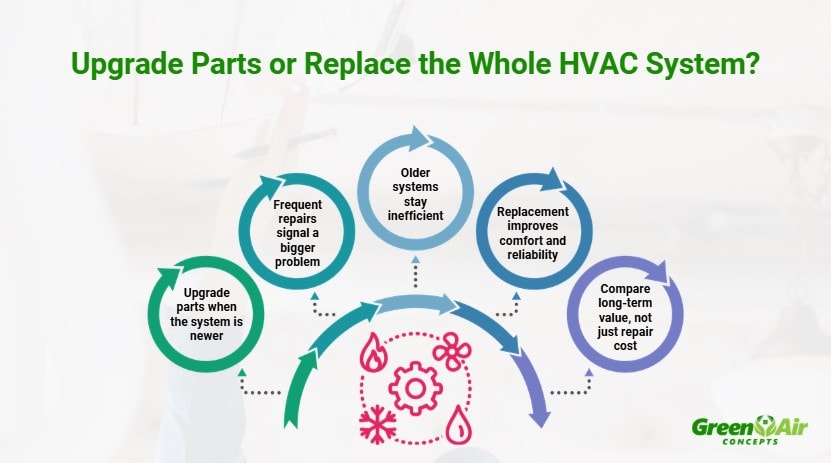
Repeated component failures often indicate that the system is approaching the end of its useful life. When multiple parts fail within a short period, replacing one component at a time may no longer deliver dependable performance.
Older systems rely on aging electrical wiring, heat exchangers, and internal controls. Replacing a single part does not stop wear in surrounding components. Over time, homeowners may spend thousands on HVAC repairs without improving efficiency or reliability.
If you notice that repairs restore operation only temporarily or that comfort problems return quickly, the value of additional upgrades declines. At this stage, replacing the whole system often becomes the more cost-effective solution.
Efficiency Limitations of Older Systems
One of the most important factors in deciding between upgrades and replacement is efficiency. Older HVAC systems were built to different standards than modern equipment. Even with new parts installed, an older furnace or air conditioner may still operate well below current efficiency levels.
This is especially noticeable in heating systems. An aging furnace may burn fuel safely but inefficiently, leading to higher monthly heating bills. Upgrading components does not change the fundamental design or efficiency rating of the unit.
In contrast, full system replacement allows homeowners to benefit from modern efficiency improvements. New systems deliver consistent comfort while using less energy, which often offsets the higher upfront cost over time.
Comfort and Air Quality Considerations
Comfort issues are another key consideration. Uneven temperatures, frequent cycling, or poor airflow often persist even after repairs when a system is nearing replacement age. These issues impact daily living and often worsen during extreme weather.
Indoor air quality also plays a role. Older systems may struggle to support advanced filtration or humidity control upgrades. Replacing the entire system creates an opportunity to integrate air quality solutions that improve comfort and health throughout the home.
For households with allergies, dry winter air, or uneven heating, replacement often delivers noticeable improvements that part upgrades cannot match.
Safety and Reliability Matter Most in Winter
Safety concerns should never be overlooked. As systems age, the risk of combustion issues, corrosion, and electrical failure increases. While some safety-related repairs are possible, recurring concerns signal deeper system deterioration.
In Pennsylvania winters, heating reliability is not optional. A system that breaks down repeatedly increases the risk of emergency hvac service calls during severe weather. When reliability becomes questionable, replacement offers peace of mind that repairs cannot provide.
Homeowners searching for hvac contractors often discover that proactive hvac replacement prevents stressful winter emergencies.
Financial Perspective: Repair Costs vs. Long-Term Value
Cost comparisons should extend beyond the immediate repair bill. A lower upfront repair cost may seem attractive, but repeated expenses add up quickly. Evaluating total repair spending over two or three years provides a clearer picture.
When repair costs approach 30 to 40 percent of replacement cost, many homeowners find that investing in a new system delivers better long-term value. New systems reduce repair frequency, lower energy bills, and often include warranties that protect against unexpected expenses.
A professional evaluation from hvac contractors helps homeowners compare short-term savings with long-term benefits.
When Full System Replacement Is the Smarter Choice
Replacing the entire HVAC system is often the best option when the equipment is over fifteen years old, shows declining efficiency, or requires frequent repairs. Replacement also makes sense when homeowners plan to stay in the home long term and want reliable comfort.
New installations allow for proper system sizing, updated duct compatibility, and improved airflow design. These factors contribute to consistent heating and cooling performance that upgrades alone cannot achieve.
Modern systems also support advanced thermostats, zoning, and air quality solutions that enhance everyday comfort while reducing energy waste.
Professional Guidance Prevents Costly Mistakes
Choosing between upgrading parts and replacing the whole system requires an honest, experienced assessment. Trusted hvac companies evaluate system age, condition, efficiency, and repair history before making recommendations.
A professional consultation includes inspecting internal components, measuring performance, and discussing budget goals. This approach ensures that homeowners invest wisely rather than reacting to the next failure.
Key Takeaways
- Parts vs. System Replacement: Deciding whether to upgrade parts or replace an entire system depends on its age, condition, and performance goals.
- Part Upgrades: Best for newer, well-maintained systems (less than half their lifespan). Replacing a single part is cost-effective, restores peak performance, and extends the unit’s life.
- Limits of Repair: Frequent repairs indicate the system is failing. If cumulative repair costs near 30-50% of a new system’s price, further repair is financially unsound. Older equipment also has limited efficiency gains; a new part won’t overcome the core design’s inefficiency, leading to higher long-term operating costs.
- Full Replacement: Provides peak efficiency, guaranteed reliability, and a comprehensive warranty. It allows for new features (smart tech, better filtration) and eliminates the risk of another component failing soon after a repair, significantly improving comfort and reliability.
- Crucial Role of Professional Evaluation: Expert assessment is vital. A qualified technician can evaluate the system’s condition, remaining lifespan, compare operating costs, and provide an unbiased, cost-benefit recommendation based on total long-term ownership cost.
Upgrading parts vs. replacing the whole system is not a one-size-fits-all decision. Green Air Concepts helps homeowners across Ardmore, Bryn Mawr, Bala Cynwyd, Havertown, Merion, Newtown Square and the Main Line suburbs evaluate their options with clarity and confidence.
Contact Green Air today to discuss your system, compare upgrade and replacement options, and choose the solution that delivers reliable comfort and long-term value.