
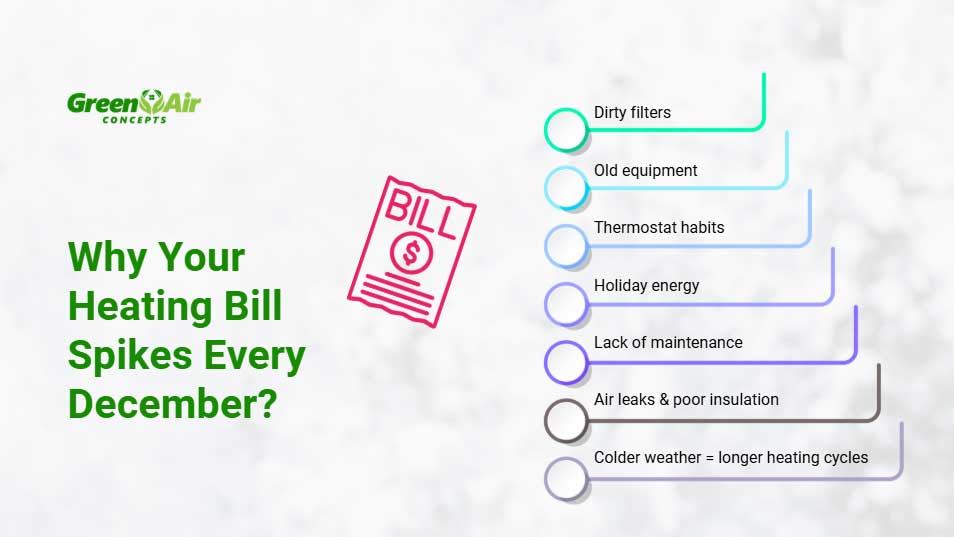
Why Your Heating Bill Spikes Every December

Every year across Ardmore, Bryn Mawr, and the Main Line suburbs, homeowners notice the same pattern: their heating bill rises sharply in December. Even when you keep the thermostat steady, the cost of staying warm seems to climb faster than expected.
Understanding why this happens is the first step to managing your winter comfort more efficiently. From freezing outdoor temperatures to hidden inefficiencies inside your HVAC system, several factors contribute to seasonal energy spikes, and most can be controlled with a few smart adjustments.
1. Colder Weather Means Longer Heating Cycles
December brings some of the coldest temperatures of the year to Pennsylvania. When the outdoor air drops into the 30s or lower, your heating system must work much harder to maintain indoor comfort.
The greater the temperature difference between inside and outside, the longer and more frequently your furnace or heat pump must run. Even a small temperature drop can significantly increase runtime and energy use.
Energy-saving tip:
- Lower the thermostat by 2 degrees to reduce energy use by up to 5 percent.
- Install a smart thermostat that automatically adjusts heating when you are asleep or away.
- Schedule seasonal HVAC maintenance to ensure your system operates efficiently before peak winter demand.
2. Air Leaks and Poor Insulation Waste Heat
Older homes throughout the Main Line area often lose heat through gaps around windows, doors, and attics. As warm air escapes, cold air seeps in, forcing your heating system to compensate continuously.
This silent but steady energy loss can increase your bills by 10 to 20 percent each month. To reduce waste, seal cracks with caulk or weatherstripping, add insulation to attics and crawl spaces where heat loss is greatest, and consider scheduling a professional energy audit during your next heater tune-up to identify problem areas. Improving insulation is one of the simplest and most effective ways to stop wasting heat and money every December.
3. Dirty Filters Reduce Efficiency
A clogged air filter forces your furnace or heat pump to work harder to push air through restricted pathways, increasing energy use over time and reducing the system’s ability to deliver consistent heat.
Dirty filters also trap dust and allergens, worsening indoor air quality. To maintain efficiency, replace filters every 30 to 60 days during the heating season, choose pleated filters rated between MERV 8 and 12 for balanced performance, and schedule regular HVAC maintenance so technicians can clean coils, test airflow, and verify system efficiency.
Replacing filters consistently helps lower energy costs and extend the life of your heating system.
4. Outdated or Inefficient Heating Equipment
If your furnace or boiler is more than 15 years old, it may no longer run efficiently. Aging parts, worn burners, and older ignition systems waste energy and increase heating time.
Even though the system still works, it may operate at only 70–80 percent efficiency compared to new models that reach over 95 percent.
Solutions:
- Schedule a furnace inspection to assess condition and efficiency.
- Upgrade to a high-efficiency system with sealed combustion and variable-speed fans.
- Explore heating installation services before a mid-winter breakdown forces an emergency replacement.
Upgrading an outdated unit can cut annual heating costs by hundreds of dollars while improving comfort and safety.
5. Thermostat Habits and Settings
Constantly adjusting the thermostat throughout the day can lead to excessive heating cycles, while setting the temperature higher than needed in an effort to “warm up faster” only wastes fuel without heating the space any quicker.
To maintain comfort and efficiency, keep your thermostat between 68°F and 70°F when home, lower it slightly overnight or while you are away, and consider upgrading to a programmable or smart thermostat that automatically manages settings.
A properly programmed thermostat can reduce energy use and save up to 10 percent on annual heating costs.
6. Holiday Energy Usage Adds Up
December is a festive month, but it is also one of the highest for energy consumption. From holiday lighting to extra cooking and guests opening doors frequently, your home experiences added heat loss and electrical demand.
To balance energy use during the holidays, switch to LED lights, which consume up to 80 percent less energy, and limit the use of space heaters, relying instead on your central heating system for better efficiency. Make a habit of closing doors promptly during gatherings to keep warm air inside. Even small behavioral changes like these can help offset the seasonal increase in heating bills and make your home more energy-efficient throughout December.
7. Lack of Preventive Maintenance
Skipping regular service appointments allows minor issues to build up; dirty coils, worn belts, or misaligned sensors can quietly reduce efficiency and raise costs. Over time, the difference can add up to hundreds of dollars in wasted energy.
Preventive steps:
- Book your annual HVAC maintenanceeach fall before the cold sets in.
- Have your system cleaned, inspected, and tested for proper operation.
- Keep maintenance records to track performance and identify recurring problems.
Preventive care not only reduces your heating bill but also prevents sudden breakdowns during peak winter months.
Key Takeaways
- December’s cold weather naturally increases energy demand, but most heating spikes can be prevented.
- Poor insulation, clogged filters, and aging equipment are common culprits.
- Regular HVAC maintenance keeps your system running at top efficiency.
- Smart thermostat habits and seasonal tune-ups can significantly reduce heating costs.
Keep Your Winter Energy Costs Under Control
Heating bills do not need to climb every December. With professional maintenance, insulation improvements, and smarter thermostat management, you can keep your Ardmore home comfortable without overspending.
For expert heating and air repair near you, furnace installation, and HVAC maintenance, contact Green Air Concepts today. Our team proudly serves homeowners across the Main Line area with trusted service that keeps homes efficient, safe, and warm all winter long.