
The Complete Guide to Extending the Life of Your Heating System
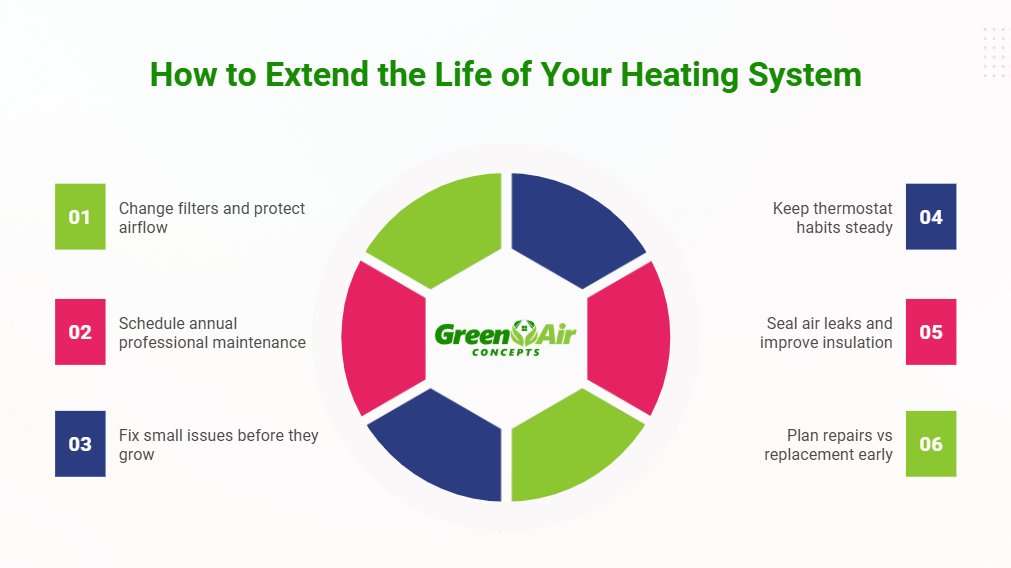
A heating system rarely “just dies.” In most homes, furnaces and forced-air systems fail early because of years of quiet, preventable strain. Restricted airflow, skipped maintenance, delayed repairs, poor thermostat habits, leaky ductwork, and homes that lose heat faster than the system can replace it all compound over time. Each of these issues forces your equipment to run longer, cycle harder, and operate under higher stress than it was designed to handle. The result is not a sudden, unpredictable failure, but a steady decline in efficiency, reliability, and safety that often goes unnoticed until the system breaks down in the middle of winter.
For homeowners in Ardmore and the Main Line suburbs, these pressures are amplified by the way heating systems are used. Pennsylvania winters bring long run times, frequent temperature swings, and periods of sustained cold that push equipment to its limits. Many homes in this area also have older duct systems, aging insulation, or building layouts that make heating more demanding than it should be. When a system is already working harder than necessary, even small maintenance gaps or airflow problems can shave years off its expected lifespan.
The good news is that extending the life of your heating system does not require complicated strategies or constant repairs. It comes down to reducing unnecessary stress, keeping airflow and combustion conditions stable, addressing small issues before they escalate, and making informed decisions about when to repair, upgrade, or plan for replacement. Simple habits such as regular filter changes, seasonal professional inspections, and attention to comfort warning signs can dramatically improve long-term performance and reliability.
This guide brings together the most important lessons from our related articles into one practical resource. You will learn how everyday habits affect system wear, how to spot early warning signs of trouble, how your home itself influences equipment lifespan, and how to decide between continued repairs and smarter upgrades. The goal is to help you protect your investment, reduce the risk of winter breakdowns, and get the full, dependable service life you paid for from your heating system.
How Heating Systems Wear Out Early in Pennsylvania Homes
Most systems are designed to last about 15 to 20 years, but the number on paper assumes normal operating conditions. In real life, your system ages faster when it is forced to run longer cycles, fight airflow restrictions, or operate with dirty internal components. Think of it like driving a car with the parking brake slightly on. It still moves, but every mile causes more wear than it should.
The biggest “lifespan killers” in Main Line homes tend to be:
- Skipped seasonal maintenance that allows small issues to snowball
- Dirty filters that restrict airflow and overheat components
- Duct leakage and airflow imbalance that forces longer run times
- Heat loss from poor insulation and air leaks that keeps the system running overtime
- Delayed repairs that turn minor wear into major damage
- Repeated repairs on aging equipment when replacement planning would be smarter
Use the sections below as a practical checklist for what to fix first and what to watch all winter.
Top Mistakes That Shorten Your Furnace’s Lifespan
Furnace lifespan is often shortened by habits that seem harmless: skipping annual service, letting filters clog, delaying small repairs, and constantly adjusting the thermostat. These behaviors increase cycling, overheating, and component strain. In older Main Line homes, duct issues and indoor air quality problems can add even more wear because the system must work harder to move air and maintain steady temperatures. Safety checks matter too. When gas or electrical components go unchecked, small issues can lead to shutdowns, overheating, or expensive failures at the worst time of year.
The simplest long-term protection is consistent care: annual tune ups, regular filter checks, prompt repairs, and duct and airflow attention.
Stop the silent damage. Know the 9 furnace mistakes homeowners make every winter.
The Maintenance Rule That Extends Heater Life the Most
If you only do one thing for system longevity, schedule seasonal professional maintenance. Not because it is a “nice to have,” but because it prevents hidden problems from becoming expensive ones. Maintenance is where early wear is found: loose electrical connections, dusty burners, drifting sensors, airflow restrictions, clogged drains, and small ignition issues that would otherwise get worse with every heating cycle.
Maintenance also keeps your heater operating within safe temperature ranges. Overheating is one of the fastest ways to shorten component life, and overheating is often caused by basic airflow and cleanliness issues that maintenance corrects quickly.
Is Skipping HVAC Maintenance Worth the Risk?
Skipping maintenance feels like savings only when nothing goes wrong. The real cost shows up later as higher utility bills, surprise breakdowns during cold snaps, and shorter system lifespan. Dust buildup and airflow imbalance reduce efficiency, which means longer run times and more strain. HVAC Maintenance also includes safety checks that homeowners cannot do themselves, including combustion testing and inspection of critical components that protect against hazards in older homes. Over the life of the system, routine service is far cheaper than emergency repairs and premature replacement.
Think your system is “fine”? Here is what maintenance catches before it becomes a breakdown
Airflow Is Everything: Why Filters, Returns, and Ducts Decide System Lifespan
A heating system is designed around a specific airflow range. When airflow drops, heat builds up inside the furnace and stresses the blower motor, heat exchanger, and safety controls. Restricted airflow also makes your home less comfortable, which often causes thermostat “overcorrection” and even longer run times.
The three most common airflow problems in Main Line homes are:
- Dirty filters
- Blocked or undersized returns (often hidden behind furniture or rugs)
- Leaky or poorly balanced ductwork that wastes heated air
Fixing airflow reduces strain, lowers bills, and helps the system cycle normally, which is exactly what extends life.
How Dirty Air Filters Can Damage Your Heating System Over Time
A dirty filter does not just reduce comfort. It creates a chain reaction: airflow restriction, longer run times, overheating risk, blower motor strain, and increased wear on ignition and control systems. Over time, this can lead to safety shutdowns, expensive repairs, and shortened system lifespan. Filter schedules vary by home, but in winter most households should check filters monthly and replace every 30 to 60 days depending on pets, dust, and usage.
Check your filter before it costs you a blower motor. Here is what dirty filters do.
Older Systems Can Last, but They Need a Smarter Approach
If your older heater still works, you do not automatically need replacement. Many older systems in Ardmore and the Main Line can run reliably for years with the right strategy: proactive service, stable airflow, thermostat accuracy, humidity support, and fast response when warning signs appear. The difference between an older system that “keeps going” and one that fails mid-winter is usually how early problems are addressed.
The key is realism. Older systems will not match modern efficiency, but they can still be safe, dependable, and predictable when maintained properly.
Maintenance Tips for Older Heating Systems That Still Work
Older systems need more attention, not less. Seasonal professional tune ups become more important with age because safety risks and wear patterns increase over time. Homeowner basics like filter changes, thermostat accuracy, airflow checks, and humidity control protect performance. Warning signs such as new noises, uneven heating, rising bills, and frequent cycling should be addressed early because older equipment has less margin for “ignoring it until later.”
If your older system still runs, keep it running longer with these maintenance moves.
Repair vs Replace: How to Know When Repairs Stop Making Sense
Repairs are normal. Repeated repairs are a pattern. The decision is not emotional; it is math and risk. If you are making frequent service calls, if comfort problems persist after repairs, or if efficiency keeps dropping, you may be paying for short-term relief instead of long-term reliability. The biggest risk is a breakdown during the coldest week, when emergency service is expensive and scheduling is tight.
A professional evaluation should look at repair history, component condition, efficiency trend, and safety factors. Planning ahead prevents rushed decisions.
How to Know If a Furnace Repair Is Delaying the Inevitable
A furnace repair is likely delaying the inevitable when repairs become frequent, costs keep rising, efficiency continues to decline, and comfort issues persist even after service. Safety concerns also increase with age, especially if heat exchanger or combustion problems repeat. Age alone does not force replacement, but furnaces approaching 15 to 20 years old should be evaluated differently because failures become less predictable and efficiency improvements through repair are limited.
Not sure if you should repair it again? Use this checklist before you spend more.
Parts Upgrades vs Full Replacement: The Decision Framework Homeowners Need
Sometimes a system is not “done,” it is just outdated in one or two key areas. Strategic upgrades like thermostats, blowers, igniters, or control boards can be smart when the system is younger and structurally sound. But when multiple components fail in a short period, or when repair costs start to approach a meaningful percentage of replacement, upgrades become a treadmill.
A strong rule of thumb many homeowners use is: if repairs are frequent and total costs over a couple of seasons are approaching a large chunk of replacement, it is time to compare total cost of ownership, not just the next repair bill.
Upgrading Parts vs Replacing the Whole HVAC System
Upgrading parts makes sense when the system is under ten years old, has a strong maintenance history, and the failure is isolated. Replacement becomes the smarter choice when repairs become frequent, efficiency is capped by old design, comfort problems persist, or reliability becomes questionable for winter. Replacement also creates a chance to improve airflow design, sizing, and home comfort features that upgrades cannot fully deliver.
Repair, upgrade, or replace? Use this decision guide to choose the smart option.
Your Home Can Shorten Heater Life: Insulation and Air Leaks Are Not “Just Comfort Issues”
If your home leaks heat, your heating system has to replace that lost heat constantly. That means longer run times, more component wear, and higher bills. Air leaks also create drafts and uneven temperatures, which leads to thermostat overuse and more cycling. In older Main Line homes, attic insulation gaps, rim joist leaks, and window and door leakage are common and they quietly force your heater to work overtime all winter.
Improving insulation and sealing air leaks does not only make the house feel better. It reduces system workload, which is one of the most powerful ways to extend equipment life.
How Insulation and Air Leaks Affect Your Heating System’s Lifespan
Poor insulation and air leaks force heating systems to run longer and harder, increasing wear on burners, heat exchangers, blower motors, and controls. Drafts and uneven heating lead homeowners to turn thermostats up, which increases runtime further. Sealing leaks and improving insulation stabilizes indoor temperature, reduces cycling and strain, lowers repair frequency, and helps systems reach their expected lifespan instead of wearing out early.
If your home leaks heat, your heater pays the price. Learn how to fix the real problem.
Quick Winter Action Plan to Extend Heating System Life
Use this as your simple, realistic checklist for the next 7 days:
- Replace or check the air filter and set a recurring reminder to check monthly
- Walk the home and confirm all supply vents and return grilles are open and unobstructed
- Set a steady thermostat schedule instead of frequent manual adjustments
- Schedule seasonal maintenance if it has been more than 12 months
- Note warning signs now (noise, uneven heat, short cycling, bill spikes) and address early
- Identify drafts at doors, attic access, and basement rim areas and seal the obvious gaps
If you are seeing repeat issues, schedule an evaluation to compare repair vs replacement before winter pressure forces the decision.
Key Takeaways
- System lifespan is mostly about reducing strain: airflow, cleanliness, and runtime
- Annual maintenance prevents small problems from turning into expensive damage
- Dirty filters are one of the fastest ways to shorten furnace life
- Older systems can last, but only with proactive service and fast response to warning signs
- Repair decisions should be based on trends: frequency, cost, efficiency, comfort, and safety
- Insulation and air leaks can shorten heater life by forcing nonstop operation
If you want your heating system to last longer, run safer, and break down less in winter, Green Air Concepts can help you build a clear plan. Schedule seasonal maintenance, airflow diagnostics, or a repair-versus-replace evaluation for your Ardmore or Main Line home today.
Need HVAC Service?
Contact the experts at Green Air Concepts.
Call us at 484.222.1233